Capt. Ken's Custom Flies
Green Cased Caddis Tungsten Trout Jig | Barbless Nymph
Couldn't load pickup availability
Green Cased Caddis Tungsten Bead Head Trout Jig – Barbless Caddis Nymph
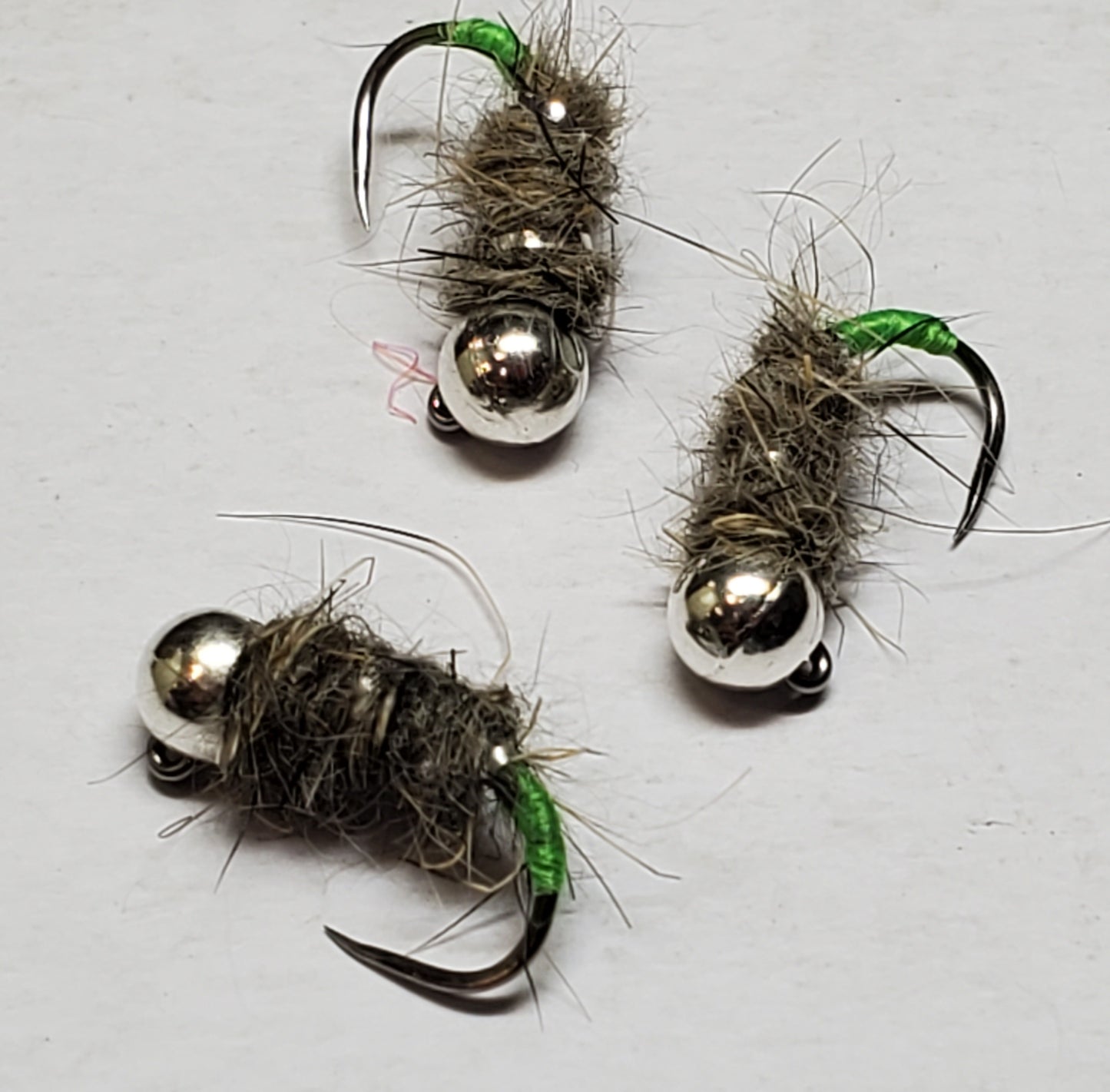
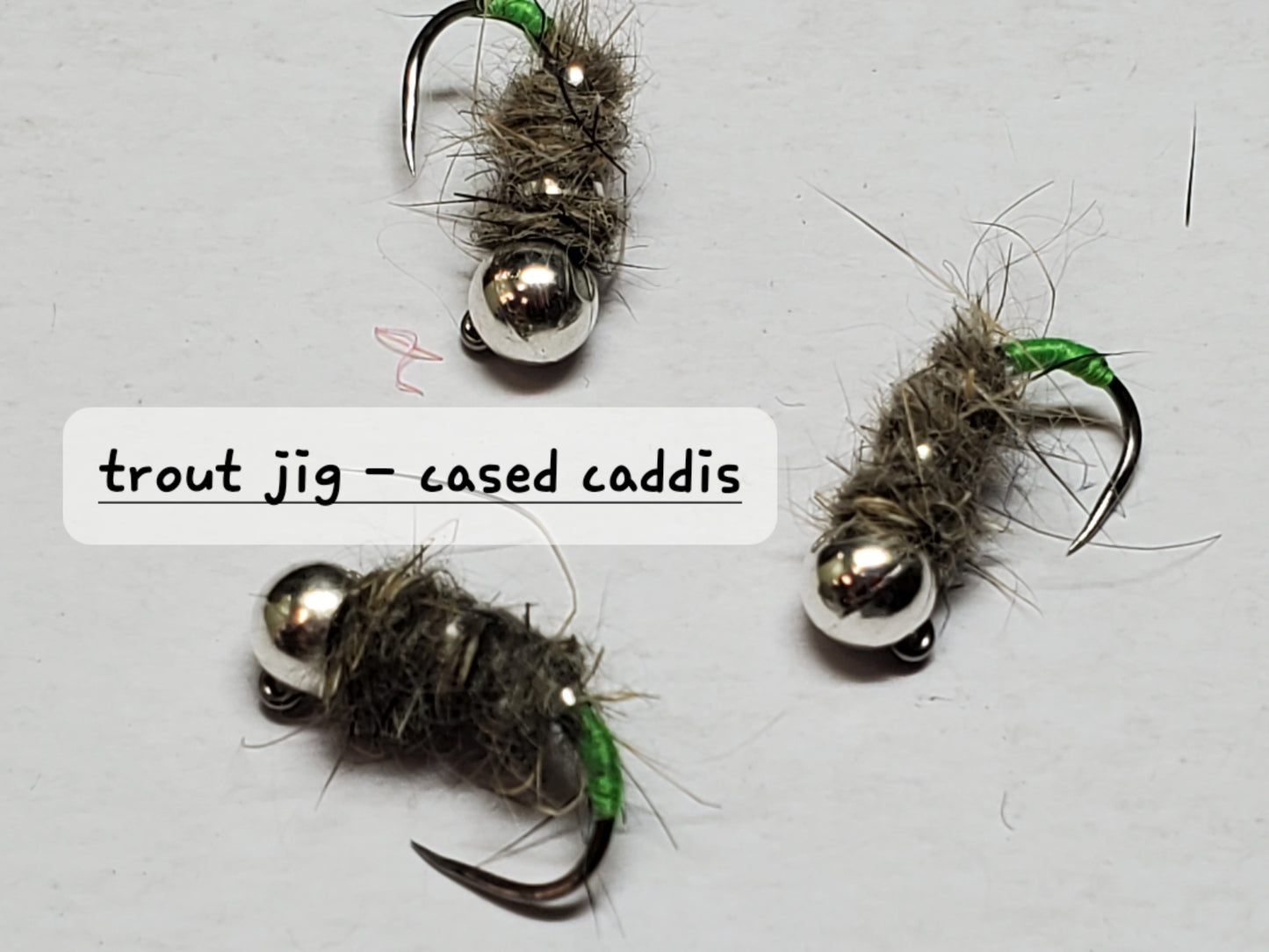
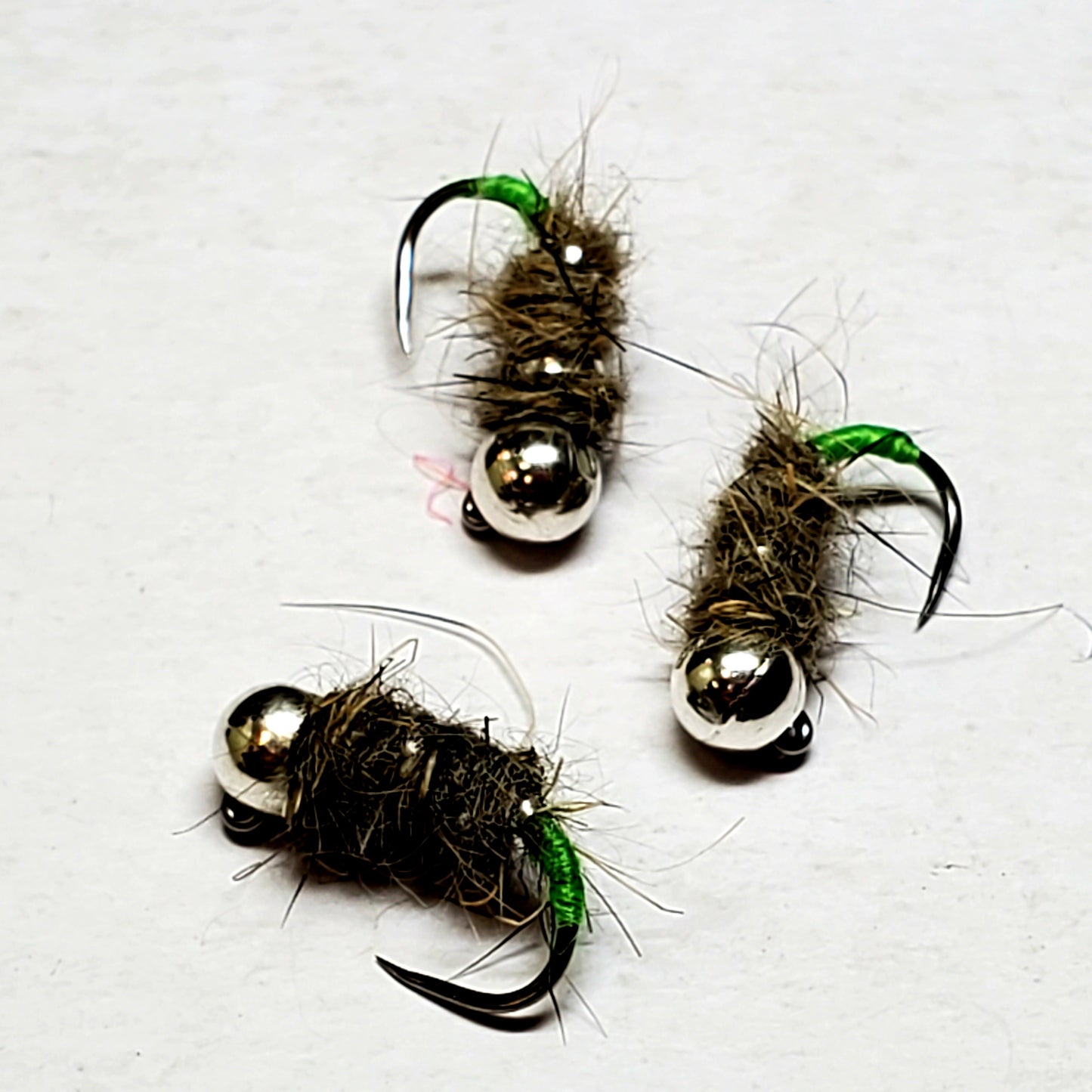
A proven caddis pattern and fly-shop bestseller! Capt. Ken’s Green Cased Caddis Tungsten Trout Jig features a natural, buggy profile and a tungsten bead to help get your fly down where trout feed. A dependable pattern throughout the fishing season.
Description
Caddis larvae are an important food source for trout and are available in streams throughout the year. The Green Cased Caddis is a versatile nymph pattern designed to imitate this dependable food source.
This pattern is a favorite with our guides and a bestseller in our fly shop. It is a great choice when fishing subsurface, whether you're targeting trout feeding on caddis or simply looking for a reliable nymph to cover a variety of stream conditions.
The tungsten bead helps the fly sink quickly, while natural furs and a spiky thorax create a lifelike, buggy appearance with the illusion of movement.
We offer our tungsten bead head trout jigs in color combinations selected to represent major aquatic insect groups, including mayflies, caddisflies, and stoneflies, along with attractor styles.
Why Fish the Green Cased Caddis?
Caddis are a consistent part of a trout's diet, making caddis nymphs a valuable pattern to carry throughout the season.
The Green Cased Caddis offers a natural presentation with a textured profile that can be fished in a variety of water conditions. Its tungsten bead makes it especially useful when you need to get your fly down quickly.
When to Fish It
-
Early season: Start with the larger #14 size, particularly when fishing higher water or deeper runs.
-
Late spring and summer: Try the smaller sizes, #16 and #18, as trout encounter smaller caddis and other aquatic insects.
-
Throughout the season: Caddis larvae remain available to trout even when no hatch is visible, making this a dependable subsurface pattern.
How to Fish It
Fish the Green Cased Caddis through riffles, runs, current seams, and deeper pockets where trout feed.
The tungsten bead helps it reach the feeding zone quickly. It works well with tight-line and Euro nymphing techniques, but can also be fished under an indicator.
Adjust your depth and drift to keep the fly moving naturally through the water trout are holding in.
Capt. Ken’s Guide Tips
-
Carry it year-round: Caddis larvae are a dependable food source, even when adult caddis aren't actively hatching.
-
Start with #14 early: The larger size is a good option for early-season conditions and deeper water.
-
Downsize later: Try #16 or #18 as spring progresses into summer.
-
Fish the current seams: Work the transition between faster and slower water, along with rocky runs and deeper pockets.
-
Keep it near the bottom: Adjust your rigging and weight to get the fly into the feeding zone.
-
Pair it with another nymph: A smaller mayfly imitation can complement the caddis pattern and give trout another option.
Details
-
Pattern: Green Cased Caddis
-
Style: Caddis nymph / cased caddis imitation
-
Bead: Tungsten
-
Hook: Barbless jig hook
-
Sizes: #14, #16, and #18
-
Materials: Natural furs with a spiky, buggy thorax
-
Purchase Options: Sold individually, in 3-packs, and half-dozens
A guide-favorite and fly-shop bestseller, the Green Cased Caddis Tungsten Trout Jig is a dependable addition to your trout nymph selection.
Share